Browsing Category

How-Tos

Books/ Cancer Journey/ GF, Vegan & Raw/ HEALTH/ Healthy Eating/ How-Tos/ RECIPES

Nutritarian – A High Nutrient Way Of Eating

Nutritarian-wfrae1
{image inspired by Dr. Joel Furhman’s Food Pyrimad}
 
I have been on a journey of health since my cancer diagnosis in 2010.  I big part of pursing health has been in what I choose to eat.  I strongly believe what we choose to put into our bodies can play a big part in our overall health.  After much reading and many small changes in my diet, I have embraced Nutritarianism.
What is a Nutritarian?
nutritarian is a person who has a preference for foods that are high in micronutrients.
The term “nutritarian” was coined by Dr. Joel Fuhrman. In his book, Eat to Live, he offers this health equation while describing the nutritarian approach to health:
Health = Nutrients/Calories (or H= N/C for short).
 
In other words: the more nutrients you consume per calorie, the healthier you will be.
Nutrients in the numerator (top part of the equation) include vitamins, minerals, and phytochemicals. Since these are found in small quantities in food, they are considered to be micronutrients. Caloric sources in the denominator include the macronutrients: fat, carbohydrate, and protein. We need to meet our caloric needs without consuming excessive calories.
A high N/C diet is also called “nutrient-dense” or “nutrient-rich.”
In the Standard American Diet (SAD), about 6% of the total caloric intake comes from nutrient-rich foods.
Nutritarians eat a diet rich in fruits, vegetables, nuts, seeds, onions, mushrooms, whole grains, beans, and berries, and particularly consume leafy greens, which are the most nutrient-dense foods. A nutritarian strives to consume at least 90% of their diet from these foods.
A nutritarian diet will lower the risk of heart disease, cancer, diabetes, and even such conditions as Parkinson’s and Alzheimer’s.
Nutritarians do not necessarily exclude animal products. Many nutritarians do choose to be vegan (excluding all animal products). Many vegetarians, however, are not nutritarian, if they frequently consume products containing processed grains, oils, sugars, or salt.
It takes a bit of education to become a nutritarian. One must learn the relative nutrient density of various foods. For instance, many people are surprised to learn that bok choy has more calcium per calorie than whole milk, and even than “2% fat” milk. The same is true for many other leaf greens.

—————-

Screen-Shot-2013-02-03-at-8.07.07-PM
{Dr. Fuhrman’s Website}

I love the idea of getting “more nutrient bang for caloric buck.”  I love thinking about food in terms of nutrients, and it feels good to know I am doing something positibe for my health by simply being mindful of the nutrients my food contains.

I have been eating this way for almost 3 years now.  It was a gradual change, but especially over the last 2 years, I have been pretty close to being a vegetarian/vegan.  I never knew what to call myself until reading Dr. Fuhrman’s Book– Eat To Live.  I HIGHLY recommend this book.  Dr. Fuhrman has so much knowledge and his words are easy to read and absorb.

Most of the recipes I now feature at the blog reflect the change in our eating habits.  My whole family is now eating this way, which happened slowly and over time.  With my kids, it truly was educating them as to why I eat the way I do, and they have slowly adapted the changes themselves.  When we are home, we eat Nutritarian.  When we go to others homes or out to eat as a family we eat more “normal.”  When Todd and I go out on dates, we prefer places that allow us to eat Nutritarian.  It it crazy how tastes buds change– we have found that we prefer whole, natural, high-nutrient foods.

Other resources that have highly influenced my way of eating:

Forks Over Knives by Gene Stone
The China Study by T. Colin Campbell
Prevent and Reverse Heart Disease by Caldwell B. Esselstyn
The Engine2 Diet by Rip Esselstyn

So…again…what is a Nutritarian?
~They eat lots of high-nutrient, natural plan foods.  Vegetables, fruits, beans, nuts & seeds.
~They eat fewer animal products and choose healthier versions of these foods.
~They eat much less or almost no foods that are empty of nutrients: sugar, sweeteners, white flour, processed foods & greasy fast foods.

———–

Got questions for me regarding the Nutritarian lifestyle?  Ask away!  It may spur on more posts in this series.

Cancer Journey/ Drinks/ HEALTH/ Healthy Eating/ How-Tos/ RECIPES

Health Update, Foods High In Potassium, & Cantaloupe Basil Agua Fresca

Potassium

Well, I woke up today with my symptoms much worse.  I had a doctor appointment at 2, and she drew more blood for more tests & scheduled a brain MRI on Monday.  I already had bone scan and CT scan scheduled on Monday, so what’s one more, right?
We are not sure if all these random symptoms are due to low potassium or not.  Many of them fit the bill, but they want to make sure we are not missing anything.  In the meantime, I am doing my best to make sure I’m ingesting as much potassium containing foods as possible, and supplementing with magnesium as it helps with absorption of potassium.
Potassium is:
is a dietary mineral necessary for balancing the pH of your body and for keeping fluids in balance as well, so it’s important for normal blood pressure regulation (it works in opposition to sodium). Potassium is also needed for normal muscle growth, and for nervous system and brain function. It’s found in many different foods, especially fruits and vegetables, so you may be getting plenty of potassium in your diet right now. If not, here’s a list of foods that contain potassium.

{from About.com}
It has surprised me that in my reading I have found that many people are low in potassium but do not even know it.  Both men & women need 4,700 milligrams a day.
Some of the symptoms of low potassium include:
Fatigue
Muscle Twitching
Tingling/Numbness 
Muscle Aches
Nausea
Feeling Chilled
Headache
Constipation
Muscle Weakness
Foods high in potassium:
  • Raisins
  • Prunes
  • Apricots
  • Dates
  • Strawberries
  • Bananas
  • Watermelon
  • Cantaloupe
  • Citrus fruits
  • Beets
  • Greens
  • Spinach
  • Tomatoes
  • Mushrooms
  • Soy and soy foods
  • Many veggie burgers
  • Peas
  • Beans
  • Turkey
  • Beef
  • Salmon
  • Cod
  • Hemp Seeds
  • Chia Seeds
  • Coconut Water

Best sources for potassium
 
……………….
Here is a potassium-filled recipe from Bon Appetit that I’m planning on making this weekend, but instead of straining the pulp, I’m going to make a smoothie!  
Cantaloupe basil agua fresca


Cantaloupe Basil Agua Fresca

Ingredients

  • 15 cups chopped cantaloupe (about two 3 1/2-pound melons)
  • 3/4 cup fresh lemon juice
  • 3/4 cup loosely packed fresh basil leaves

  • Special equipment

    Cheesecloth

Preparation

  • Working in batches, purée cantaloupe in a blender until smooth.

  • Set a fine-mesh sieve over a large bowl; line sieve with cheesecloth. Strain purée into bowl; gather cheesecloth into a bundle and squeeze any remaining juice into bowl. Repeat process with fresh cheesecloth, straining into a large pitcher (you should have about 5 cups juice).

  • Add lemon juice, basil, and 2 cups cold water to pitcher. Let steep at room temperature for 1–2 hours. Fill glasses with ice. Divide agua fresca among glasses.

…………………

I will let you know when I get scan results.  Love to you all!

Healthy Eating/ How-Tos/ RECIPES

A Peak Inside Our Refrigerator + What We Ate That Week

Healthy Refrigerator

*This is part 2 of a series.  To read part one “A Peek Inside our Refrigerator + ….

When I posted the above pic of a peek inside our refrigerator on Instagram, a friend of mine asked if I could tell her what I would make from what she saw in my refrigerator – as far as meals go.


I understood where she was coming from, looking at this makes it seem like all we eat is raw plants, and although a big chunk of our diet is plants, and at least half our dinner plate is salad, we do have cooked meals.  I made some notes of what we planned on eating that week and will share it with you today!

In this second post I will share:

  1. What else is in the refrigerator that you may not be able to see.
  2. How foods in pantry and freezer are key to creating well-rounded meals.
  3.  How only buying what you need for the week is key to an organized refrigerator.
  4. Meals we ate that week
  5.  Snacks we ate that week
  6.  Lunches we ate that week
  7.  Breakfasts we ate that week


How to organize a refrigerator
 

1. What You Can’t See

In the above pic, there is a bag of shredded cheese and some eggs.  I go very easy on the cheese, using only about 1/3 of what most recipes call for, so one bag can often last 2 weeks.  I do this for health reasons, not cost…but it does help the food budget to eliminate most animal products.


Our eggs are also local and organic.  There is hummus from Trader Joes, we use it to dip pretzels, veggies and to top salads in place of salad dressing.  There are a couple little containers of food from our local organic deli. I am the only one that eats these, usually for lunch.


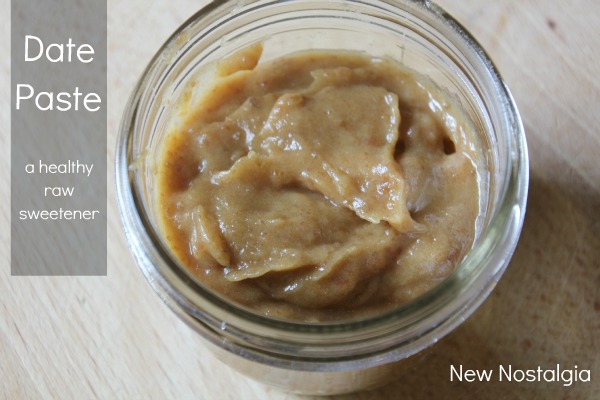
There is almond milk behind that bottle of Kombucha, and our water filter pitcher.  The only thing you can’t see is what is in our door, which really is just condiments + strawberry freezer jam, some date paste + some earth balance (butter substitute).


date paste

2. Foods In My Pantry

What you don’t see are my freezer and my pantry, and the foods in there are the key to making meals out of what you see in my refrigerator.  Example, I have mason jars of cooked beans (made a large batch of Crockpot Refried Beans) in the freezer, and whole grain pasta in the pantry.


3. Only Buy What Is Needed

The week I took the picture, we only needed 5 meals, as 2 of the days I did not need to cook since we would not be home.  Because I plan my meals out and write my grocery list according to those recipes and what we already have, I didn’t have anything in my refrigerator that we wouldn’t be eating within the week, other than condiments.


4. Meals for the week:

~My Go To Chili Recipe

~Crockpot Refried Bean Burritos

~Spaghetti (no meat)

~Breakfast for dinner (French Toast & Eggs & fruit salad)

~Garlic Veggie Pasta


french toast

I serve every dinner we have with a green salad loaded with veggies.  I often make a cooked veggie side, too.  I love to roast veggies, especially at the end of the week I love to throw any leftover cut up veggies onto a pan, and roast away.  Click here for my post on everything you need to know about Roasting Vegetables.


5. Snacks For The Week
~pretzel thins dipped in hummus

~veggies dipped in hummus

~nuts

~Raw Raspberry Bliss Bars

~Streusel Topped Blueberry Muffins

~Smoothies

~baked potato (my oldest loves coming home from school and popping one in the microwave)

~popcorn

~wheat thin type crackers


Raw raspberry bliss bars
streusel topped whole wheat blueberry muffins
school lunch smoothies

6. Lunches For The Week

~I pack my girls’ lunch every week–it is the typical sandwich, fruit, vegetable, granola bar, crackers.  It is usually a nut butter sandwich.

~I try to make my Todd a batch of soup at the beginning of each week, store in mason jars and freeze.  These are his lunches for the week at work.  French Lentil Soup is a favorite of ours.

~There is usually enough soup for me, too, or I visit the local health food store deli—I admit—way too often!  They have the most beautiful pasta salads, quinoa salads & vegetable salads.  Mmmmmmm.

~When we are all home together, my girls like to boil whole wheat pasta & melt some earth balance on it and sprinkle with Parmesan cheese.


granola bar

7. Breakfasts For The Week

~oatmeal (these Freezer Steel Cut Oat Pucks make it very easy!)

~Chia Oats

~cereal (bran flakes, crispy rice)

~whole wheat English muffins & honey

~ Toad in a Hole 🙂


toad in a hole
chia oats
freezer steel cut oat pucks

………………..

So there is a pretty typical week of food/eating in our home. I hope this gives you some good ideas on how to get your family to eat more plant food.  It really is so much easier when a little bit of thought goes into what ends up in our grocery cart, and how it is displayed & stored once we get home.  You all know how passionate I am about staying healthy, and an organized refrigerator really has been key to reaching that goal!

Healthy Eating/ HOME/ How-Tos/ Organizing/ RECIPES

A Peek Inside Our Refrigerator & Using Mason Jars To Make It Pretty & Organized

glass bowls and mason jars holding fruit and vegetables inside a refrigerator

I posted this picture on New Nostalgia’s Facebook & Instagram, and it got quite a bit of attention! Who knew that an organized refrigerator using mason jars would be so interesting?!  promised a post that talked more about the picture and instead of ONE post, I will be writing TWO!

In this first post, I will talk about: 

1. How a pretty & organized refrigerator helps keep waste to a minimal
2. How I keep the refrigerator looking this way on a weekly basis
3. How glass is the key, so you can SEE!
4. How Mason jars are a great alternative to plastic
5. How I cut my veggies for successful consumption
6. How jars keep fruits and veggies fresher, longer
7. How jars keep my kids munching on veggies

In the second post  I will share:
A. What else is in the refrigerator that you may not be able to see.
B. What we eat. How foods in the pantry and freezer are key to creating well-rounded meals.
C. How only buying what you need for the week is key to an organized refrigerator.
D. Meals we ate that week
E. Snacks we ate that week
F. Lunches we ate that week
G. Breakfasts we ate that week
glass bowls and mason jars holding fruit and vegetables inside a refrigerator

So, on to points 1-7:

1. First, this is a new goal of mine…to have a pretty & organized refrigerator.  It has been well worth the extra thought and effort. Since I started using glass bowls and mason jars, it has been so much easier to see what is in there & find what we need.  We do not waste food like we used to, and I don’t buy things that I already have! Most importantly, I know my family is eating nourishing plant foods!

2. I have been trying to do my grocery shopping on Saturday or Sunday.  Even before I leave to grocery shop, I do a quick clean out of our refrigerator, taking note of what we have and what we need.  This way the refrigerator gets cleaned out once a week and never gets too bad.  It really only takes minutes, and is so well worth it!  It also only takes minutes to take fruit out of their bags once you get back from the store and put them into bowls.  The kids can do this for you!  Yes, slicing veggies and putting them in the jars takes more time, but not as much as you would think.

3. The glass bowls you see in there stay in there.  Most weeks they contain the same fruit, but the mango bowl sometimes has grapefruit instead.  The apple bowl sometimes has pears instead.  It all depends on the seasons, and what is on sale.  Glass is the key.  It allows the fruit to look like the art that it is and be on display!  I find what is on display gets eaten, so it works well.

4. Mason jars are a long time favorite of mine.  We do not have any disposable plastic storage containers, and my goal is to use all glass for food storage. I have a cabinet shelf that holds all 3 sizes of mason jars, and I keep their lids and rims all in a big bowl in a place that is easy to grab and reach.  We use them for dry food storage too, so I have quite a few of them.  They are so much better than stained plastic, and I love that they can go straight from the refrigerator to freezer, and from the freezer to the microwave (lid removed) to defrost if needed. The small 4oz jars are great for single servings of soup or chili.

Organized refrigerator

5. As you can see in the picture, I chop most of the veggies up ahead of time, at the beginning of the week. I am known for taking my big bamboo cutting board and sitting on the floor in front of the TV to do my chopping.  Oh yes!  The floor!! My cutting board is big enough to keep all food on it, so it works for me!  Most weeks I get to this.

If it is an extra busy week, I still make sure to take fruits out of their bags and display in bowls. Then the next time I make a salad (we eat them daily),  I take an extra few minutes to slice the veggies we use on the salad to store in the jars.  I use a mandolin for cucumbers, peppers, and carrots. It is one of my most used kitchen tools. It makes great thin slices for topping salads.

I also like to have carrot sticks and red pepper sticks to dip in hummus or put into lunch boxes, so I will save some to cut into sticks and put in a separate jar.  If I buy a bunch of onions, I will use my food processor to cut them into a dice size, store them in 1 cup jars, keep one out for the week to use in recipes and freeze the rest.  There are certain veggies I do not slice up.  These are usually ones I am planning on using in recipes, like squash.  I buy bags of broccoli already cut up into florets, and keep them in the bag, but if you buy it whole, mason jars are great for storing these, too.

6. I have been very surprised at how long our veggies stay fresh in mason jars. Even up to a week they do not get slimy. I do sometimes add a splash of water to sit at the bottom of the jars if the veggies start looking dried out at all. I will give it a little shimmy shake after adding the water, and they are good to go all week.

7. There is nothing better than finding an empty jar and knowing one of my girls were busy munching on cucumbers or carrot sticks.  Oh, how that makes this Mama happy! Now, the key to my girls munching on vegetables is not having a bunch of junk food snacks sitting around.

If healthy vegetables, fruits, and snacks are all you have in the house, they will eventually eat them. But if you have cakes, cookies and cupcakes, they will be much less likely to grab plant food snacks.

………………..
 
Make sure you look at part 2.
 
 
Do you have any tips for me?
What thoughts did this post spur on in your head?
I would love to know if you care to share!

GF, Vegan & Raw/ Healthy Eating/ How-Tos/ RECIPES

12 Favorite Plant Sources Of Protein + 39 Plant Based Recipes

PicMonkey-Collage-Plant-Protein
 
A question I get asked often as a plant- based eater, is “Where do you get your protein?”  Thanks to the meat and dairy industry, we Americans have it drilled into our brains that we need huge amounts of protein, so getting enough protein the first thing on every one’s mind when considering eating less animal foods.
I will answer that question in this post and with the help of Dr. Fuhrman’s words below.
………………..

From Dr. Fuhrman


In North America, about 70 percent of dietary protein comes from animal foods. Worldwide, plant foods provide 84 percent of calories. The first scientific studies to determine human protein requirements were conducted in the 1950s. These studies demonstrated that adults require 20-35 grams of protein per day.[1] Today, the average American consumes 100-120 grams of protein per day, mostly in the form of animal products. People who eat a vegetable- based diet (vegan) have been found to consume 60-80 grams of protein per day,well above the minimum requirement.[2] More importantly, eating more plant protein is the key to increasing our micronutrient intake.

74475_10151494393268482_925543705_n
 It is interesting to note that foods such as peas, green vegetables, and beans have more protein per calorie than meat. But what is not generally considered is that the foods richest in plant protein also are the foods richest in micronutrients-vitamins, minerals, fibers, bioflavonoids, & antioxidants. By eating more of these high-nutrient, low-calorie foods, you get plenty of protein and your body gets flooded with protective micronutrients at the same time. Animal protein does not contain antioxidants or phytochemicals and is filled with saturated fat – the most dangerous type of fat. Even a professional bodybuilder desiring to build half a pound of extra muscle per week only needs about seven extra grams of protein per day over normal intake. No complicated formulas or protein supplements are needed to get sufficient protein for growth, even in the serious athlete. Since exercise results in increased hunger, athletes consume more food (calories), which provides more protein.
………………..
 
I love the idea of eating foods with the MOST micronutrients.  This is why my husband and I have really jived with the Nutritarian lifestyle.  What is a Nutritarian?  It is a person who chooses their foods based on micronutrient content.   
 
Let’s go through the above foods and I will share with you how we incorporate them into our diet.
 
1. Almonds
This one is easy.   I love buying them sliced thin to use on salads.  Trader Joes has amazing Honey Roasted sliced almonds that make a salad taste like a treat.  We will eat whole, raw & unsalted, just plain as a snack, or grind them into almond butter in the food processor.  I use them in our Raw Taco “Meat” and will throw them into the base of Raw Raspberry Bliss Bars along with the walnuts.  Trader Joes also has Dark Chocolate & Salted Covered Almonds.  I eat a couple of these.  At night.  In bed.  While reading.  It makes me VERY happy!

5-Minute-Raw-Nut-Taco-Meat
IMG_76681


More recipes from NN that use almonds:

Raw Cookie Dough Bites
Lemon “Larabar” Balls
Homemade Pesto
No Bake, No Sugar Chocolate “Larabar” Truffles
Delicious Strawberry-Kiwi Spinach Dump Salad
Fruit Pie With Apricot-Nut Crust
Chewy No Bake Granola Bars
Orange-Almond Polenta Cake With Strawberries


2. Avocados
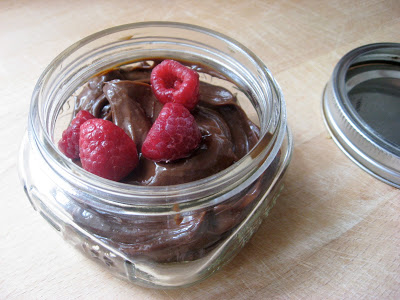
Guacamole of course.  These are great thrown in smoothies instead of yogurt.  It makes the most creamy smoothies ever!  They are amazing in my Chocolate-Avocado Mousse with Raspberries recipe. They are good sliced thin on toast or thrown onto a sandwich or salad.

chocolate avocado mousse with raspberries


More recipes on NN that use avocado:

Black Bean, Corn, Avocado & Hominy Salad
5 Minute Creamy Avocado Dip
Chocolate-Avocado Mousse with Raspberries
Green Smoothie Popsicles
5 Minute Lemon Basil Guacamole Dip

3. Black Beans
Oh I love my black beans!  I eat some sort of bean daily and black beans are one of my favs.  They are great in wraps, on nachos, on salads.  I love them simply seasoned and on top of brown rice.

IMG_5786
 

More recipes on NN that use black beans:

Go-To Easy Black Bean Soup
Quinoa & Black Bean Salad
Black Bean, Corn, Avocado & Hominy Salad
Bean & Corn Salsa With Rice, Cheese & Chips to Dip
My Go-To Chili Recipe
Mom’s Taco Salad

4. Broccoli
We eat our broccoli raw, steamed and roasted.  Raw broccoli dipped in hummus is a double- whammy for protein.  I love to steam it and season with salt, pepper & finely grated lemon peel.  Roasted is also a delicious way to eat broccoli.

 
IMG_5386
 
5. Hummus
Hummus makes me happy.  I’ve been using it as a salad dressing.  Make a big green salad, add veggies, apples, dried cranberries & slivered almonds.  Top with a big blob of hummus.  YUM!  Hummus is great as a sandwich spread.  I use it to make my most favorite Hummus Sandwich Heaven.  Trader Joes has flat pretzel chips that go great with hummus.  Also makes a very healthy veggie dip.

Hummus-Sandwich-1


6. Lentils.
I have yet to post one of my favorite lentil recipes here on the blog–coming soon!  Another favorite lentil recipe of ours is French Lentil Soup.  I could eat this soup almost daily, it is THAT good.  I make it every couple weeks.  Lentils are a quick cooking bean, and super easy to make!  We use them to make Red Lentil Sloppy Joes.  Mmmm…

IMG_4233
 
7. Oatmeal.
8. Peanut Butter
We use it as a dip for apples.  We use on sandwiches, toast, or a dip for dark chocolate. We often top our bananas with it–slice banana lengthwise and smear with peanut butter–this is great way to add some protein to breakfast!

IMG_4459
 
More recipes from NN that use peanut butter:
 

Peanut Butter Clouds
Fudgy Buttons


9. Pumpkin Seeds
I need to experiment more with these.  I have used them in this granola recipe and it was yummy. I also like them thrown on a spinach salad with along with chickpeas.  Spinach, chickpeas and pumpkin seeds all contain protein so it is a great way to put protein on your salad without meat.  What are ways YOU use pumpkin seeds?  

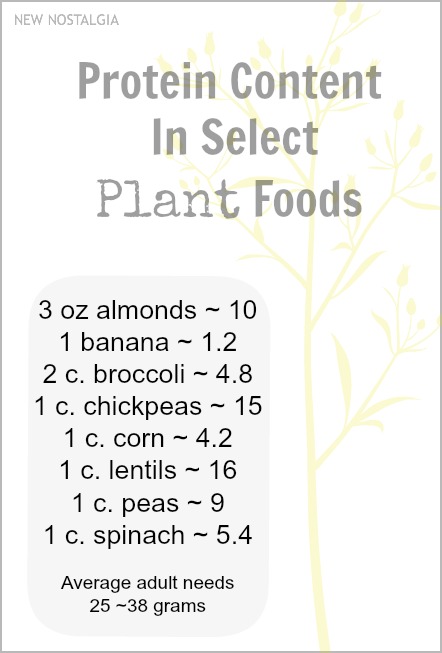
PLANT-PROTEIN


10. Quinoa
If you can make rice, you can make quinoa. It is one part water to one part grain, just like rice.  Quinoa is a STAPLE in our home.  It is a grain that is full of protein.  You can eat it hot or cold.  It has a bit of a nutty flavor, and takes on whatever flavor you add to it.  I love making cold quinoa vegetable salads in the summer, and eating it like you would a warm bowl of oats in the winter.  

IMG_1760


11. Tempah
Tempah is a soy product, and with my breast cancer history I stay away from soy, so we do not eat much of it.  Honestly, I don’t trust many of the soy products in the United States since a huge percentage of it is GM.  BUT, if I do choose to eat soy, organic tempah is a product that I feel most comfortable with as it goes through a fermentation process which makes it extra healthy.  Tempah is a great way to add the “texture” of meat in dishes like vegetarian chili.  My local health food store makes an amazing Jamaican Jerked Tempah, and served over rice it gives on the feel of eating meat.  They also do a BBQ Tempah, and when slapped on a bun, even my meat-eating friends love it & comment that it feels and tasted like a BBQ beef sandwich.
 
12. Tofu
Not a fan, due to the reasons above.  I don’t buy it and I don’t use it.  
 
………………..
 
Also from Dr. Fuhrman
 Dr. Fuhrman


{to learn more, see Dr. Fuhrman‘s Eat To Live book.  One of my favorites!}

In the chart below, an equal caloric amount (100 calories) of porterhouse steak is compared to broccoli, romaine lettuce and kale. Broccoli provides the greatest amount of protein per calorie.

Green vegetables are all rich in protein, and relatively low in calories. They provide generous amounts of most micronutrients with no cholesterol and virtually no fat. Meat on the other hand, is relatively low in micronutrients. Remember whole grains, beans and seeds are also high in protein and should be utilized to achieve adequate protein on a diet with no or minimal animal products. But the point in this example was to illustrate how weight-loss favorable green vegetables are and that no matter how many green vegetables you eat, you still cannot take in too many calories. If you fill up on greens, they will reduce your desire and ability to overeat.

Broccoli, frozen,
chopped boiled
Romaine
Lettuce
Kale,
cooked
Beef Short Loin,
Porterhouse Steak,
separable lean & fat,
1/8 “ fat, broiled
Beef short Loin,
Porterhouse Steak,
separable lean & fat,
1/4” fat, broiled
Calories 100 100 100 100 100
Weight (g) 357 (12.6oz) 588 (20.7oz) 358 (12.6oz) 34 (1.2oz) 30 (1.0oz)
Protein (g) 11.1 7.2 6.8 8.0 6.5
Fat (g) 0.4 1.8 1.4 7.4 7.7
Carbohydrate (g) 19.2 19.4 20.2 0 0
Fiber 10.8 12.4 7.2 0 0
Cholesterol 0 0 0 24.1 21.6
Calcium (mg) 118 194 258 2.7 2.4
Iron (mg) 2.2 5.7 3.2 0.9 0.8
Magnesium (mg) 46 82 64.4 7.8 6.0
Potassium (mg) 507 1453 816.2 109 76.5
Vitamin C (mg) 143 23.5 146.8 0 0
Thiamin (mg) 0.2 0.4 0.2 0 0
Riboflavin (mg) 0.3 0.4 0.3 0 0
Niacin (mg) 1.6 1.8 1.8 1.4 1.2
Vitamin B6 (mg) 0.5 0.4 0.5 0.1 0.1
Folate (mcg) 200 800 46.5 2.4 2.1
Vitamin A (IU) 3609 51253 48763 0 0
Vitamin K (mcg) 315 603 2924 0 0

Source: Data was obtained from Nutritionist Pro Nutritional Analysis Software, Version 4.7, Axxya Systems , Stafford TX, 2012.

Please note that 100 calories of steak is only about one ounce, which is not much meat to fill you up. More typically, 4 – 8 ounces is eaten, supplying too many calories and too much animal protein without the lifespan enhancing micronutrients. Bottom line—eat more greens and less meat to get more micronutrient bang per caloric buck and to suppress your calorie intake.

 
plant based protein
………………..
 
The video below is one of the catchiest tunes about getting protein from plants. BEWARE if you watch it once, you will be singing it forever.  My kids and I have fun with this one, singing “Where do you get your iron? PLANTS!  Where do you get your calcium? PLANTS!”  It is cute and fun.
……………….

Last but not least, both my daughter and I had some blood work done recently.  I was very curious how her iron, B-12, calcium etc levels were since she is eating Nutritarian.

Both of our levels came back perfect, and BOTH of us were high in calcium, despite the fact that we eat very, VERY little dairy.

1. Rose W. The amino acid requirements of adult man.

Nutritional Abstracts and Reviews 1957;27:631. 2. Hardage M. Nutritional studies of vegetarians. Journal of the American Dietetic Association 1966;48:25. 

How-Tos/ RECIPES

What Is Gluten?

We are thrilled to be welcoming Meghan as our Health & Gluten Free Contributor here at New Nostalgia.  Meghan will be here once a month on Saturday sharing her knowledge of all things gluten free, from tips to recipes.  She has much to share in the area of health, and I know you will enjoy her warmth and knowledge as much as I do.

Meghan newsom
Meghan Newsom
Health & Gluten Free Contributor

Meghan’s site: eat.live. make.

 You can follow her here:
{Facebook}{Twitter}{Pinterest}{Instagram}
…………………………..

I am so honored and excited to be a part of New Nostalgia, and the New Nostalgia contributing team! Amy is such a blessing to me, as I know she is to all of you wonderful readers who stop by. I wanted to take a little minute to introduce myself, so you can know a little bit about me and why I am so passionate about eating a plant based, whole foods, gluten free diet.

Meghan Newsom

My name is Meghan, and I write over at eat.live.make. After battling with sickness for many many years (and still am!) it was discovered that I have Celiac Disease. The only “cure” for this disease is by following a strict gluten-free diet. I also am allergic to casein, so our diet quickly changed from vegetarian to gluten free and vegan! Due to my health issues, I have also learned how to live a more natural and holistic lifestyle. I do not believe that everyone needs to/ or SHOULD adapt a gluten-free lifestyle, BUT I DO believe that everyone can benefit from a plant based and whole foods diet!!  If you want to learn a bit more about me, you can do so here.

pears
You have heard the word “gluten” more and more lately, and are most likely wondering what it is! By definition, gluten is “is the generic name for certain types of proteins contained in the common cereal grains wheat, barley, rye and their derivatives. The good news is that all fresh fruits, vegetables, beef, chicken, fish, lamb, pork and dairy products are naturally gluten-free.” Source.

If you do not suffer from gluten allergies/intolerances or Celiac Disease, you most likely know someone in your life that does. If you suspect you may have an intolerance to gluten, you can find a great list of symptoms here

The word “gluten” is being heard more recently because doctors are becoming more aware of its effect on people’s health, thus they are able to diagnose gluten intolerances and Celiac Disease now more than ever! Simply adhering to a gluten-free diet can eliminate almost all, if not ALL of the symptoms related to the disease. Pretty cool, huh? 

It is not my mission to convert you all to eating a gluten free diet! By no means! Most people digest the protein found in gluten quite well, and should not take it out of their diets. In fact, gluten-free products have much more sugar and fats in them vs. their glutenous counterparts, so if you are looking for a weight loss diet this is not for you. 

I do, however,  think it is so important that all of us become more aware of a gluten-free diet, and the HUGE issue of cross contamination while cooking gluten free, because many of you may have friends and/or family members who must adhere to this diet! Meals are such an important part of community and our culture, and when people are not able to partake in corporate meals it limits their ability to take part in something beautiful. It is my hope to equip you with enough simple knowledge so that you will be able to cook and host those friends and family members who cannot have gluten in their diets- and you will be confident in doing so!! 

The recipes I am going to be sharing with you are all gluten free and mostly vegan. The cool thing is that most of them can be made with gluten (if you do not need to adhere to the diet) and are all whole foods and plant based! I am not a baker, so you will not be finding beautifully baked gluten free products on here from me. I am actually a horrible gluten free baker and try to stick with as many boxed mixes as I can:). 

Until next month, let me know if you have any questions (you can feel free to email me!) and I will try my best to answer them. I’ll be back next month with a tasty gluten free recipe. 


HEALTH/ How-Tos/ Natural Products/ RECIPES

Homemade & Healthy Lavender Lime Body Spray

We are thrilled to be welcoming Kendra as our new Natural & Homemade Contributor here at New Nostalgia.  Kendra will be here one Saturday a month sharing her knowledge of all things natural. 
Kendra blogs at Our Homemade Happiness and writes about all things homemade, especially cleaners, skincare & healthy eating.  
Kendra Drake
Kendra Drake
Natural & Homemade Contributor
Kendra started her blog after her husband suffered from mono symptoms for over two years and his blood results showed some liver disease.  Since the liver is responsible for filtering out chemicals and toxins from the bloodstream, she started to realize how many chemicals are in everything we buy, from processed food to household cleaners, lotion, and even air freshener.  She has become inspired to rid her home of as many chemicals as she can, one product at a time, and write about it along the way.
You will love Kendra & all the great things she has to share! 
………………..
essential oils

I LOVE essential oils. They are all-natural, they have medicinal and therapeutic benefits, there are so many ways to use them, they don’t go rancid, their little bottles are so cute . . .ahem, I digress. Even though they might seem expensive, they are super concentrated and a little goes a very long way.

 So today I’m going to show you how to make a super simple body spray with essential oils. You’ll save money by making your own, but that isn’t even the best part. The best part is you will smell good without all the nasty chemicals in commercial body spray. You will know exactly what’s being absorbed into your skin and inhaled into your lungs.

  lavender lime body spray
 

what you need
 spray bottle
2 Tbsp vodka or water
3 drops lavender essential oil
8 drops lime essential oil

  directions
 Add vodka or water to the spray bottle.  If you use water, you’ll need to shake really well before each use because essential oils do not dissolve in water.  I bought my 2 oz. glass spray bottle at Sprouts, a health food store, for about $3.  Add essential oils.  I don’t really like the smell of lavender by itself, but when it is mixed with lime it becomes light and fresh and smells oh so good.  

Avoid direct use on skin that will be exposed to sunlight within 12 hours. Lime essential oil is photosensitive, meaning when it is left on skin and exposed to sunlight, it can cause the sun’s effect to be greatly magnified.  So I only use this body spray on my clothing or on parts of my body that aren’t going to be exposed to the sun. 


   homemade body spray ingredients

cost savings

$2.00/oz Bath & Body Works Fragrance Mist [$6/3 oz] 
  $1.10/oz Homemade Lavender Lime Body Spray

$0.46 dōTERRA Lime Essential Oil [$17.33/15 ml] $0.28 dōTERRA Lavender Essential Oil [$28/15 ml] $0.36 vodka [$9/750 mL] or $0 for water

You can find quality essential oils at dōTERRA  


Top